Core Features of vCISO Software for Modern MSP Security Operations

A virtual Chief Information Security Officer (vCISO) gives organizations access to senior security leadership without the cost of a full-time executive. It is a model widely used by startups and mid-sized companies to define security strategy, manage risk, and stay audit-ready as they scale.
But security leadership becomes more difficult as environments grow. Assets multiply, compliance demands increase, and risks spread across disconnected tools and spreadsheets. At that point, visibility breaks down and decision-making slows.
This is where vCISO software becomes essential. Instead of juggling fragmented systems, it centralizes asset, risk, control, and compliance data into a single operational view. It helps translate security data into clear priorities, measurable progress, and business-aligned decisions.
In this article, we’ll break down the core features of vCISO platforms and how each one supports scalable, structured, and business-aware security programs.
{{banner-small-3="/inline-cards"}}
Summary of essential vCISO software features
The table below summarizes the six essential vCISO software features this article will explore in detail.
Unified risk & asset visibility
Unified risk and asset visibility is a core feature of modern vCISO software because organizations cannot secure assets they cannot identify. Most businesses today operate across cloud platforms, SaaS applications, endpoints, servers, and remote environments, which makes asset tracking difficult. vCISO platforms help centralize this information into a single, continuously updated view so security teams and MSPs can understand what exists in the environment and where the highest risks are located.
Asset discovery is often a major challenge for growing organizations. New cloud resources, endpoints, SaaS accounts, and shadow IT can appear without centralized oversight. This creates security blind spots that attackers frequently exploit. vCISO software continuously discovers and inventories assets by integrating with cloud providers, endpoint tools, identity systems, and vulnerability scanners. For example, if a new internet-facing server is deployed in a cloud environment, the platform can automatically detect and classify it before it becomes an unmanaged risk.
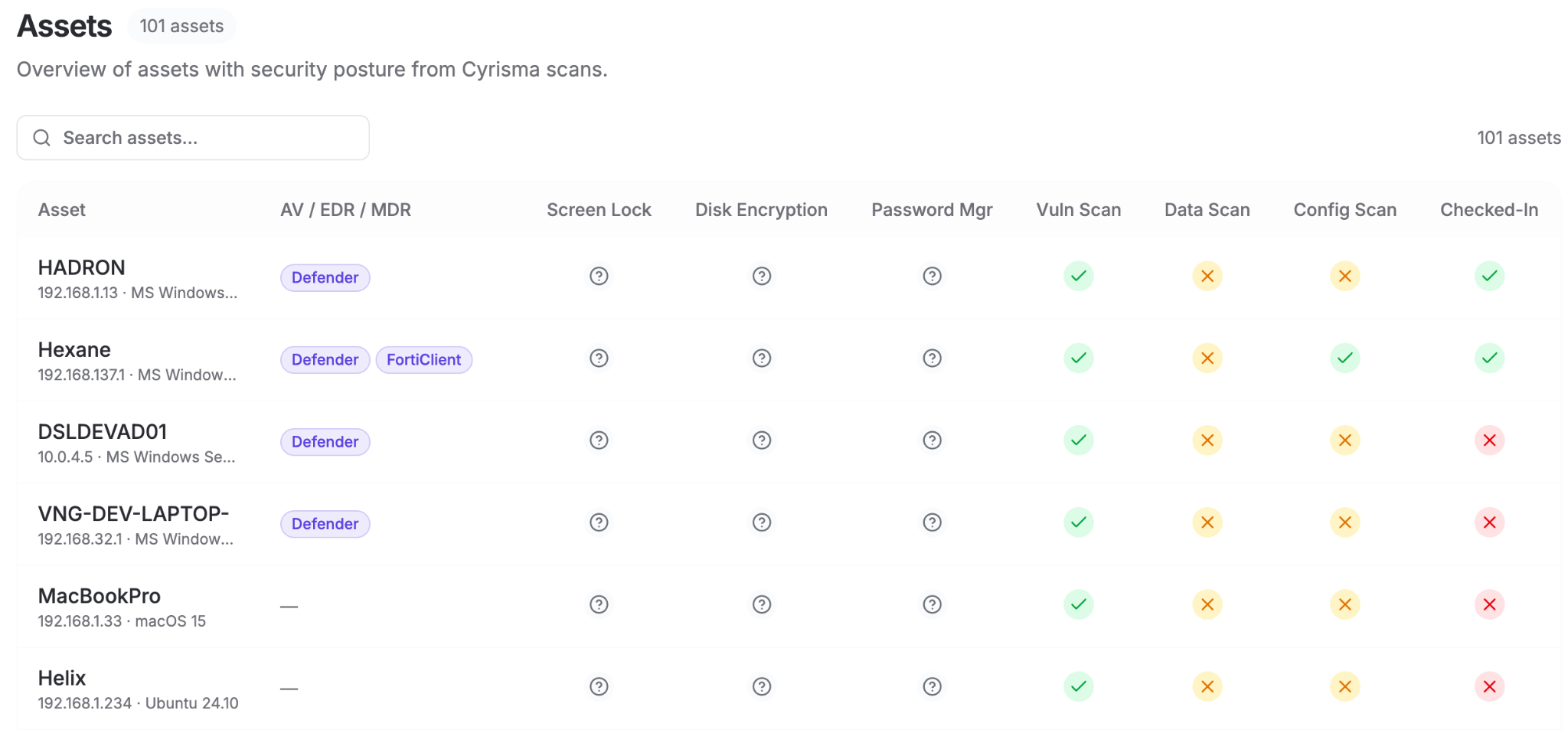
Effective vCISO software also adds risk context to technical findings. A vulnerability alone does not explain how dangerous an issue is to the business. These platforms combine factors such as asset criticality, internet exposure, sensitive data access, and compliance impact to help prioritize risks. This allows MSPs and security teams to focus remediation efforts on the systems that pose the highest operational or financial risk, rather than treating every alert equally.
Another important capability is linking technical assets to business ownership and impact. Many organizations struggle to identify who owns a system or which business service depends on it. vCISO software helps map assets to departments, applications, and compliance requirements.
{{banner-small-2="/inline-cards"}}
Compliance mapping & automation
As organizations grow, they often need to comply with multiple frameworks and regulatory requirements simultaneously. Compliance management can quickly become challenging as tracking requirements manually through spreadsheets and disconnected documents is time-consuming and difficult to maintain. vCISO platforms help centralize compliance activities by mapping controls, policies, risks, and evidence into a single system that continuously tracks compliance status.

One of the biggest advantages of compliance mapping is the reuse of controls across frameworks. Many security requirements overlap between standards such as SOC 2, ISO 27001, HIPAA, and PCI DSS. For example, access control policies, multi-factor authentication, and logging requirements often satisfy controls across multiple frameworks. vCISO software automatically maps these overlaps so teams can avoid duplicating work and manage compliance more efficiently.
Modern vCISO platforms also automate evidence collection and compliance monitoring. Instead of manually gathering screenshots, configuration exports, or policy documents before an audit, the software can continuously collect evidence from cloud platforms, endpoint systems, identity providers, and security tools. This aggregation provides a more accurate, real-time view of the compliance posture. If a required security control becomes misconfigured or disabled, the platform can quickly flag the issue before it becomes an audit finding or security gap.
Policy & governance management
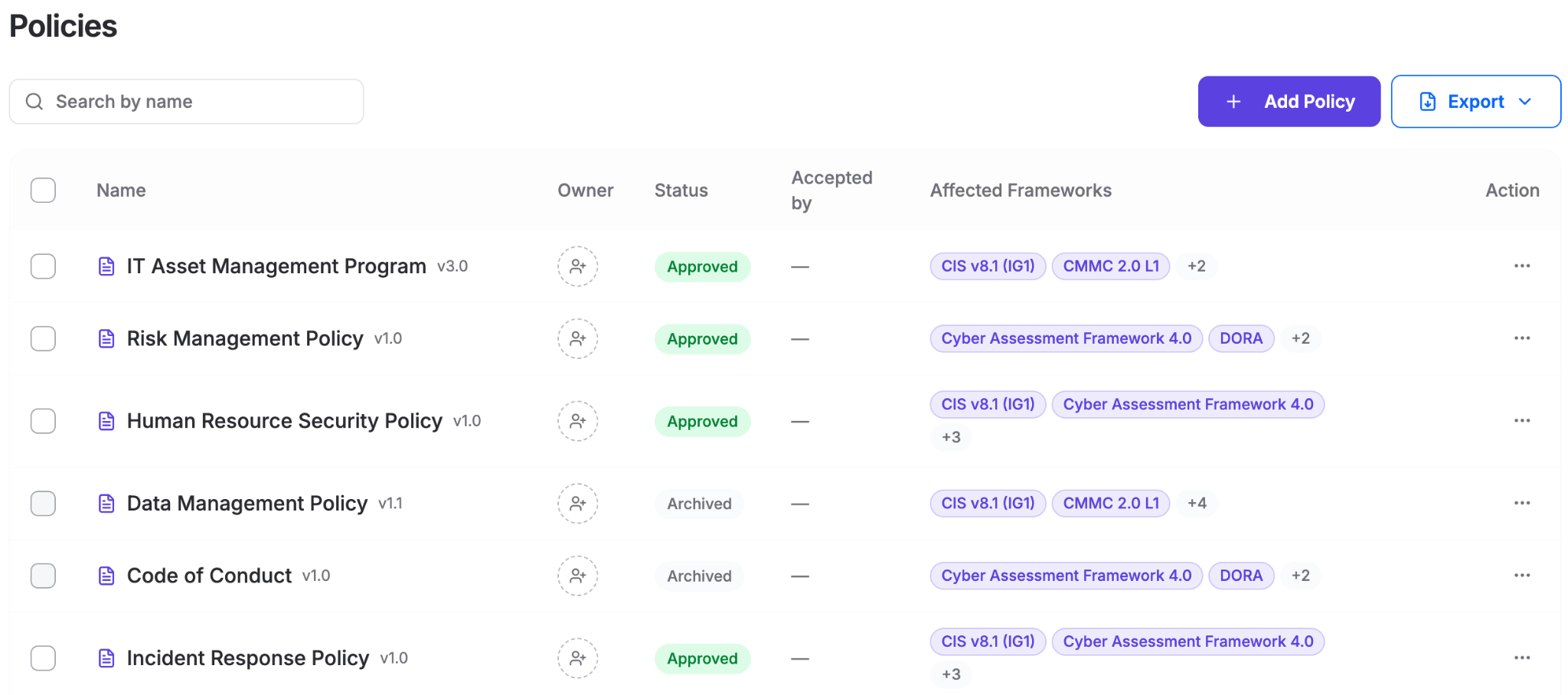
Security policies are difficult to manage when they are scattered across shared drives, email threads, and outdated documents. vCISO software helps organizations centralize policy management by providing a structured system for creating, reviewing, approving, and updating security policies. This system empowers MSPs and security teams with a consistent way to manage governance activities while ensuring employees and stakeholders always reference the latest approved versions.
A strong policy and governance management feature also supports the full policy lifecycle. Policies often evolve as regulations change, new technologies are introduced, or business risks increase. vCISO platforms track version history, approval workflows, review schedules, and policy acknowledgments in one place. For example, if an organization updates its password or acceptable use policy, the system can record who approved the change, when it was published, and which employees confirmed acknowledgment.
Another important capability is traceability between policies, controls, and risks. Security policies should not exist as isolated documents with no operational connection to the organization’s security program. vCISO software links policies directly to technical controls, compliance requirements, and identified risks. For example, an access control policy may connect to identity management controls, audit logging requirements, and risks related to unauthorized access. Traceability like this helps organizations understand how governance decisions support broader security and compliance objectives.
Governance accountability is also easier to maintain when ownership is clearly defined. Many organizations struggle because policies, risks, and remediation activities lack assigned owners. vCISO platforms allow teams to assign responsibility for controls, policy reviews, exceptions, and corrective actions to specific departments or individuals.
Strategic planning & roadmapping
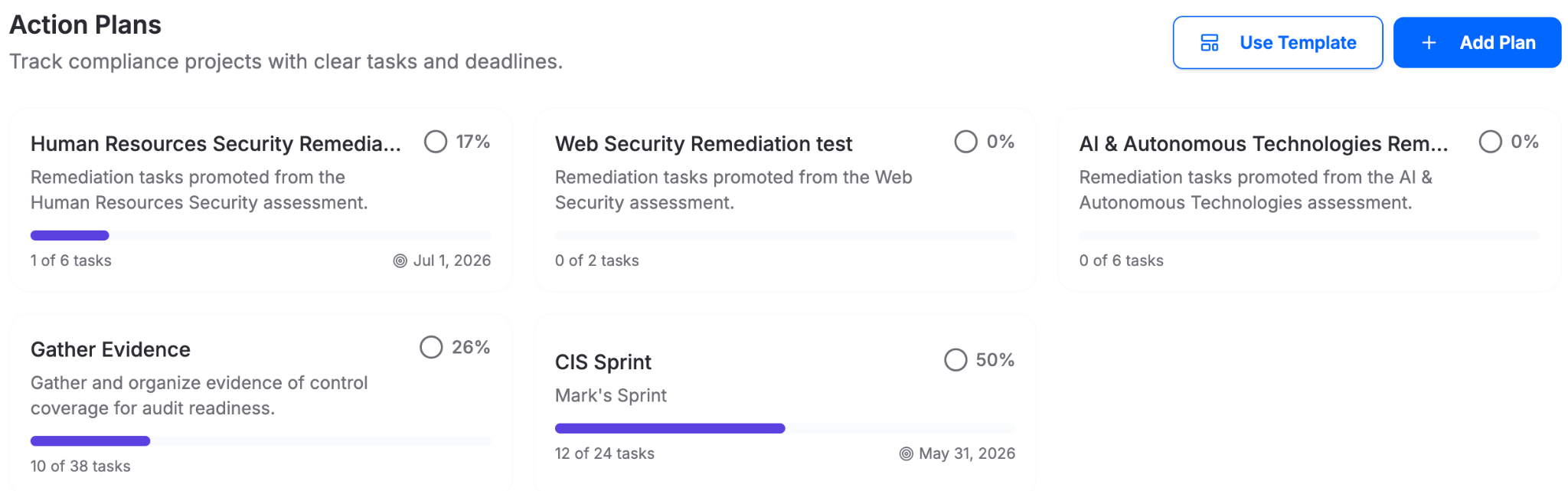
Security programs often struggle with prioritization, especially when faced with a constant stream of vulnerabilities, compliance requirements, and emerging threats. Without a clear strategy, efforts become reactive, leading to inefficient resource use and misaligned initiatives.
Strategic planning and roadmapping provide a structured way to align security activities with business objectives. By leveraging risk insights, organizations can identify which initiatives will have the greatest impact, allocate resources accordingly, and ensure that security investments are both targeted and effective.
A well-designed roadmap balances short-term remediation with long-term improvements. It allows organizations to address immediate risks while also building capabilities that enhance resilience over time. This forward-looking approach helps avoid the cycle of constant firefighting that many security teams experience.
Additionally, a clear roadmap improves communication with stakeholders. It provides visibility into priorities, progress, and expected outcomes, making it easier to justify investments and demonstrate the value of security initiatives to executives.
{{banner-large-3-vciso="/inline-cards"}}
Executive reporting
Raw security alerts and vulnerability data are rarely useful to executives without proper context. Business leaders need concise insights that explain how security issues affect operations, financial risk, compliance exposure, and business continuity. vCISO software helps translate large volumes of technical security data into executive-level reports that are easier for leadership teams, boards, and customers to understand.
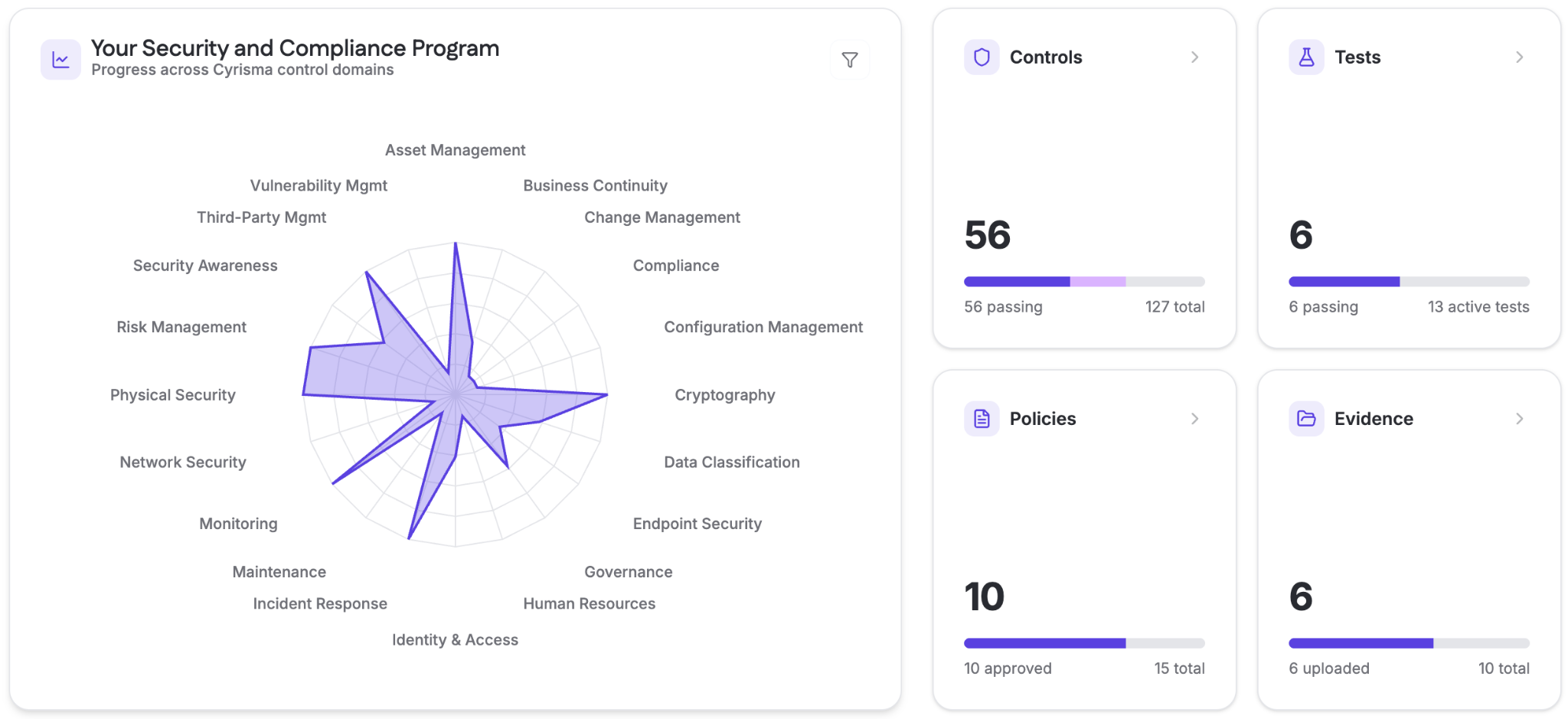
These platforms typically provide dashboards and reporting features built around key performance indicators (KPIs) and key risk indicators (KRIs). KPIs may include remediation timelines, policy compliance rates, phishing test results, and trends in vulnerability reduction. KRIs focus more on measuring exposure, such as the number of internet-facing critical assets, high-risk third-party vendors, or privileged accounts without multi-factor authentication. Instead of presenting isolated technical findings, vCISO software helps organizations track measurable security progress over time.
Another important capability is communicating cyber risk in financial and operational terms. Executives often need to understand the business impact of a security issue rather than the technical severity score alone. For example, a vulnerability affecting a payment platform may result in revenue disruption, regulatory penalties, or damage to customer trust. vCISO platforms help connect technical risks to business outcomes, enabling leadership teams to prioritize investments and remediation decisions more effectively.
Operational integration
Modern security environments are built on a diverse set of tools, each addressing a specific function such as vulnerability scanning, identity management, or threat detection. When these tools operate in isolation, they create silos that limit visibility and increase manual effort.
Operational integration enables a vCISO platform to connect to these systems and serve as a central hub for security data. Aggregating information from multiple sources provides a unified view of the organization’s security posture, eliminates the need to manually correlate data across tools, and reduces the risk of missing critical insights.
Integration also enables automation of workflows. For example, identified risks can be automatically converted into tickets, assigned to the appropriate teams, and tracked through remediation to ensure that insights are not only identified but also acted upon promptly.
{{b-table-3-vciso="/inline-cards"}}
Last thoughts
The six vCISO software features outlined above work together to transform fragmented security efforts into a cohesive, risk-driven program. Instead of reacting to threats or chasing compliance deadlines, organizations can take a proactive approach grounded in clear priorities and measurable outcomes. As security expectations continue to evolve, investing in the right vCISO software is not just about efficiency; it is about enabling consistent, scalable, and business-aligned security leadership.