Key Components of a Cybersecurity Risk Assessment Template

Cybersecurity risk assessments are a foundational element of modern security programs. As organizations increasingly rely on digital infrastructure, leadership teams must ensure that cyber risks are identified, analyzed, and addressed in a structured and repeatable manner.
A cybersecurity risk assessment template provides organizations with a standardized framework for documenting and evaluating risks across systems, applications, and data environments. Rather than conducting risk assessments ad hoc, a well-designed template enables teams to consistently capture key risk information, prioritize security efforts, and align risk management with business objectives.
This article outlines the most common components of a cybersecurity risk assessment template used by organizations across industries. These components are designed to support structured risk analysis while aligning with widely recognized security frameworks such as the National Institute of Standards and Technology Cybersecurity Framework and ISO/IEC 27001.
{{banner-small-3="/inline-cards"}}
Summary of key sections in a cybersecurity risk assessment template
The table below summarizes the six components that are common in many cybersecurity risk assessment templates.
Why organizations use a cybersecurity risk assessment template
Before examining the template structure, it is important to understand why organizations rely on standardized templates for risk assessments. Fundamentally, a reliable cybersecurity risk assessment template can bring rigor and standardization to the risk treatment process. At scale, a well-designed template helps organizations enable:
- Consistent risk evaluation: Ensures all departments and systems follow the same approach to identify and assess risks.
- Executive visibility: Provides leadership with a clear, consolidated view of organizational cybersecurity risks.
- Regulatory & framework compliance: Supports alignment with frameworks such as NIST, ISO 27001, and SOC 2, easing audit requirements.
- Prioritized security investments: Guides decision-making by linking risk severity to business impact.
- Audit & governance documentation: Maintains structured, traceable evidence of risk assessments for governance and review purposes.
Key components of a cybersecurity risk assessment template
While templates can vary across organizations, most cybersecurity risk assessment templates include the following core components.
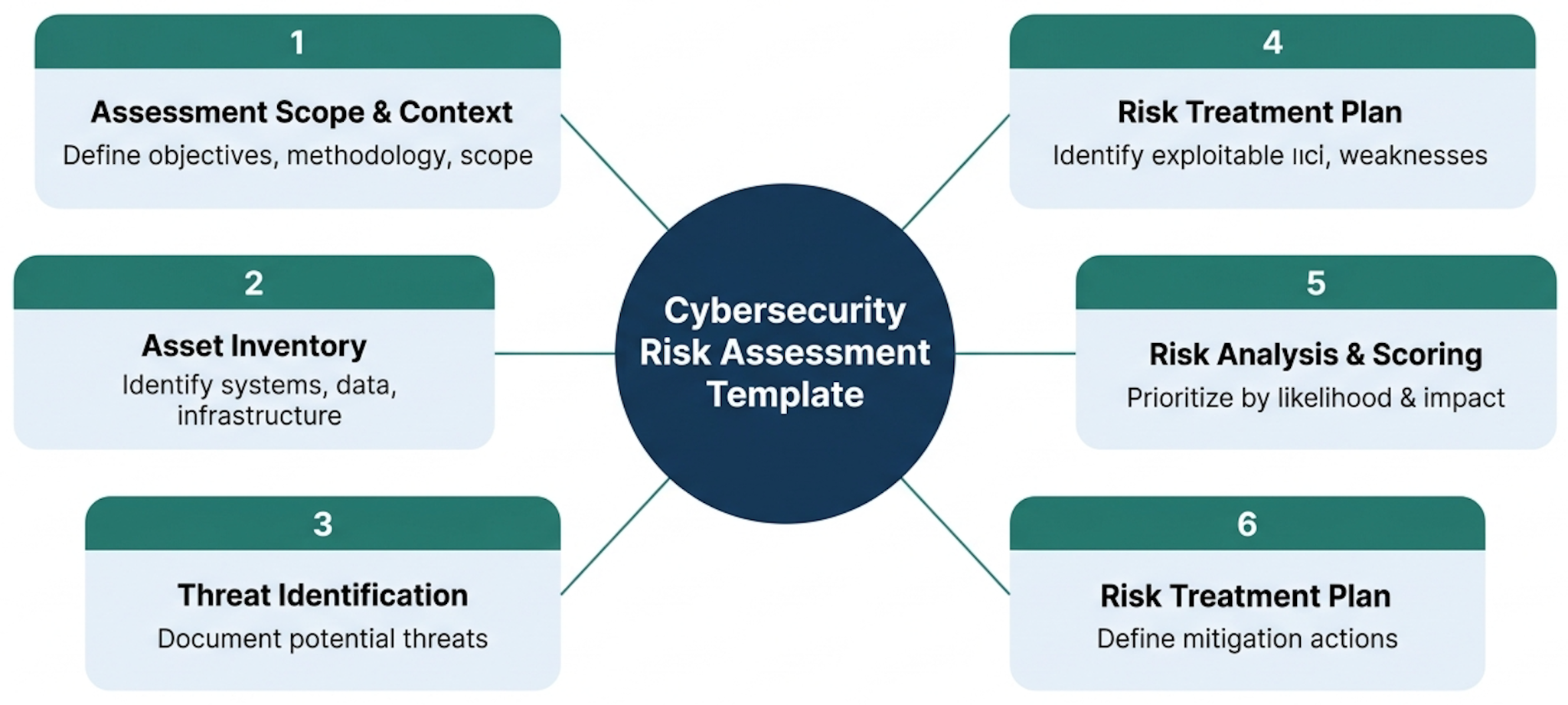
1. Assessment scope & context
This section should clearly spell out what you are assessing and why, in simple, direct terms. Start by defining the risk assessment objective in a way that teams can immediately act on. For example, identifying the most critical risks to your systems, understanding your biggest exposures, and helping leadership decide where to invest in security controls. Avoid vague language and instead tie the objective to real outcomes, such as protecting customer data, reducing downtime, or meeting specific compliance requirements.
Additionally, describe exactly what is in scope to avoid confusion during execution. List the types of assets being assessed, such as production systems, cloud environments, internal tools, APIs, and third-party services. Be explicit about which business units or environments are included (e.g., corporate IT, engineering, customer-facing platforms), and call out anything intentionally excluded to help prevent teams from making assumptions and to ensure the assessment effort stays focused and complete.
You should also document who is involved and when the assessment will take place. Identify the teams responsible for providing input (e.g., IT, security, and legal) and the owner of the final risk decisions. Include the assessment timeframe, how often it will be repeated, and what triggers an out-of-cycle review (e.g., major system changes or new regulatory requirements).
{{banner-small-2="/inline-cards"}}
2. Asset inventory
This section defines exactly which assets are being evaluated in the risk assessment, so teams are not guessing or overlooking critical components. Start by identifying all relevant asset types, including servers, endpoints, cloud resources, applications, databases, APIs, and network infrastructure. Be specific about what qualifies as an asset in your environment, and ensure that both technical and non-technical assets, such as third-party services or managed platforms, are included where they support business operations.
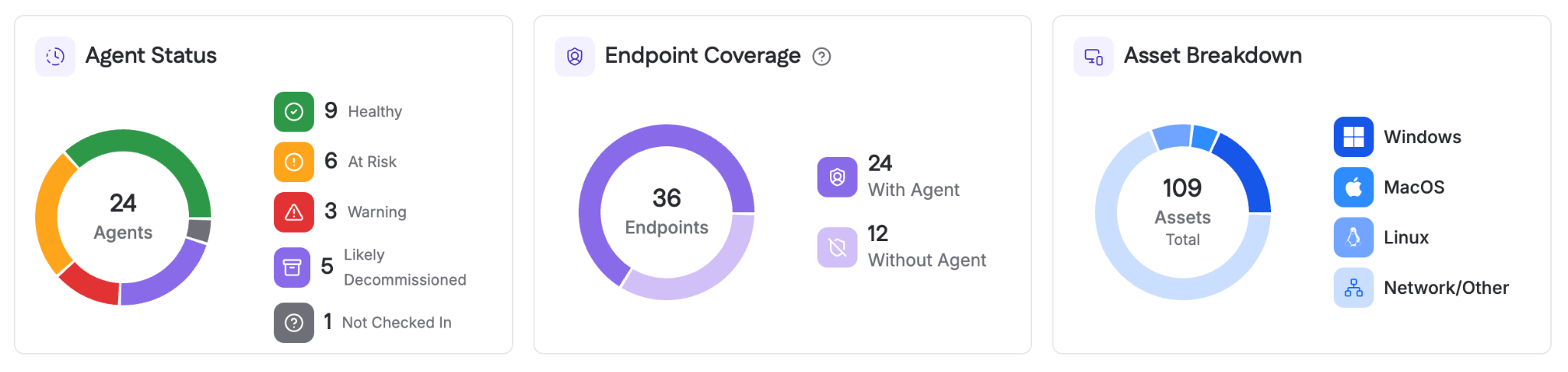
Teams should describe how these assets should be documented and categorized. For example, assets can be grouped by business function, environment (production vs. staging), or data sensitivity. It is important to capture key details such as asset owner, location, purpose, and the type of data processed or stored. This level of detail makes it easier to prioritize risks later, especially when certain assets handle sensitive data like customer information or financial records.
Equally important, clarify how the inventory will be created and maintained over time. Indicate whether the organization relies on automated discovery tools, configuration management databases (CMDB), cloud asset inventories, or manual input from system owners. The process should ensure that new assets are added promptly and outdated ones are removed, so the inventory reflects the current environment. An incomplete or outdated inventory will directly weaken the accuracy of the risk assessment.
3. Threat identification
This section focuses on identifying the real-world threats that could impact the assets defined in your inventory. Start by describing how your organization will systematically identify threats, rather than relying on ad hoc assumptions. This typically includes reviewing historical security incidents, analyzing threat intelligence feeds, consulting vulnerability reports, and considering common attack patterns relevant to your industry. The goal is to build a practical list of threats that are actually likely to target your environment.
Next, make it clear how team members should map threats to specific assets. For example, a web application may face threats like injection attacks or credential stuffing, while cloud infrastructure may be exposed to misconfiguration or unauthorized access. Encourage teams to think in terms of “what could go wrong for this asset,” rather than listing generic threats, to ensure threat identification is directly tied to business systems and not treated as a theoretical exercise.
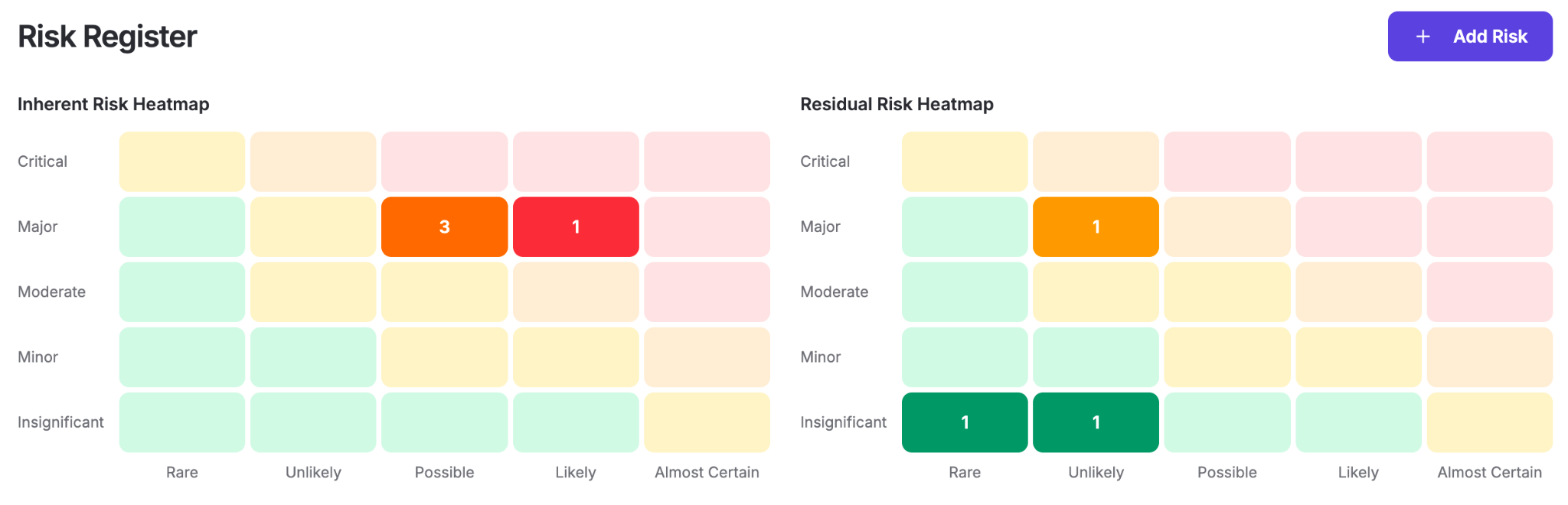
Additionally, teams should define threat categories to keep the process organized and repeatable. Common groupings include external threats (e.g., cybercriminals and nation-state actors), internal threats (e.g., employee misuse or error), and environmental threats (e.g., outages and natural disasters). You can also align these categories with known frameworks, such as MITRE ATT&CK, to provide teams with a structured way to think about attacker behavior and tactics.
Finally, explain how the threat list will be maintained and updated. Threats evolve quickly, so this section should require regular reviews based on new intelligence, emerging vulnerabilities, or changes in the organization’s technology stack. Assign responsibility for updating threat information and ensure that it feeds directly into the risk analysis process to keep your risk assessment relevant and grounded in the current threat landscape, rather than outdated assumptions.
{{banner-large-3-vciso="/inline-cards"}}
4. Vulnerability assessment
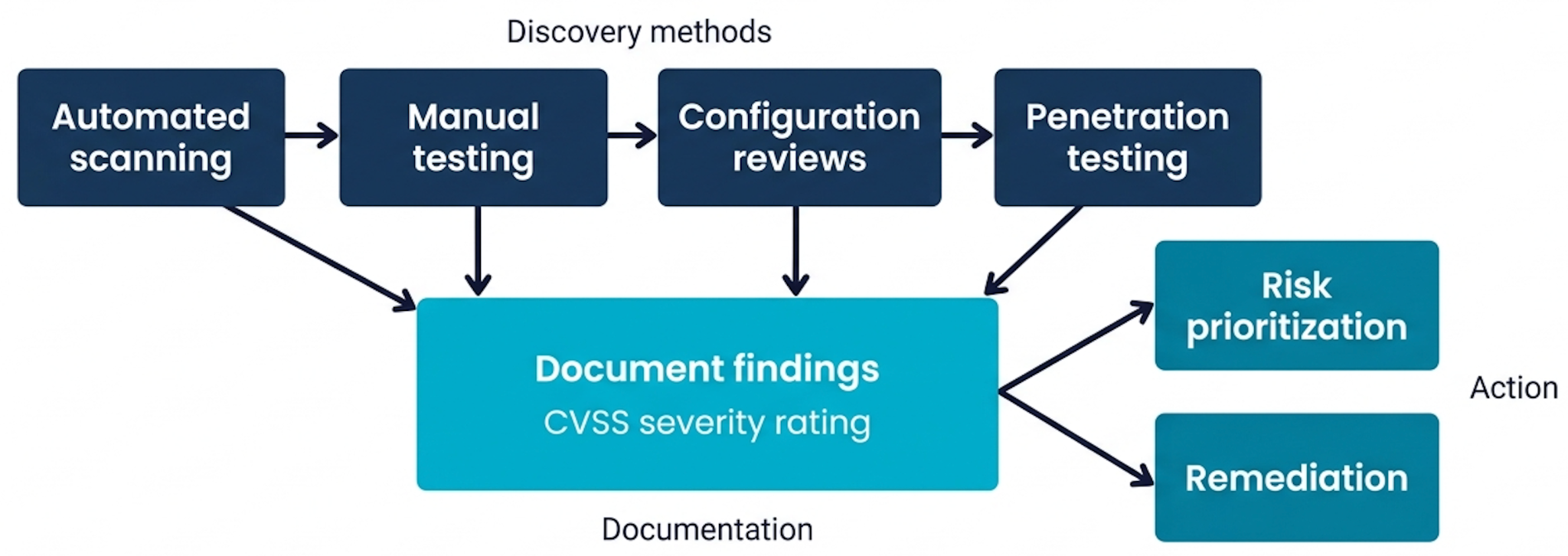
This cybersecurity risk assessment template section outlines how the organization identifies weaknesses in systems, applications, processes, and security controls that threat actors could exploit. Focus on the most critical areas supporting business operations and sensitive data, such as servers, endpoints, network devices, web applications, and cloud services. Describe the primary methods for discovering vulnerabilities, including automated scanning, manual testing, configuration reviews, and penetration testing. Emphasize the need to document each finding clearly, including the affected assets, potential impact, and severity, using a standard rating system such as CVSS for consistency.
Furthermore, define how the vulnerability information will be maintained and acted upon. Assign ownership for regularly reviewing and updating the vulnerability list, and link it directly to risk prioritization and remediation efforts. Include a process for periodic reassessment and monitoring to ensure new vulnerabilities are captured as software, configurations, and processes change. This approach ensures the organization continuously understands and addresses its weaknesses, keeping risk management proactive and actionable.
5. Risk analysis & scoring
This section explains how the organization evaluates the severity of each identified risk by combining the likelihood of occurrence with the potential impact on critical assets and business operations. Start by defining a clear, repeatable methodology for assessing both factors. Likelihood can be determined based on threat intelligence, historical incidents, system exposure, and existing controls, while impact should consider operational disruption, financial loss, regulatory penalties, and reputational damage. Use a structured rating scale, such as High, Medium, Low, or numeric scores, to ensure consistent evaluation across all assets and teams.
The policy should guide teams to include concrete data points that make the risk assessment actionable and measurable. Here’s what to consider:
- Asset information: Identify the specific asset or system affected (from your asset inventory), such as “Customer Database,” “Corporate VPN,” or “Payroll Application.”
- Threat description: Link the risk to a threat from the Threat Identification section. For example, “Phishing attacks targeting privileged users” or “Misconfigured cloud storage exposing sensitive data.”
- Vulnerability reference: Include the vulnerability that enables the threat, like “Outdated web server software,” “Weak password policy,” or “Unpatched VPN appliance.”
- Impact score: Quantify the potential consequences if the risk materializes. Include operational impact (downtime), financial impact (loss, fines), regulatory impact (non-compliance penalties), and reputational impact. Again, use a consistent scale.
- Overall risk rating: Combine likelihood and impact to assign a risk level (e.g., High, Medium, Low) and help prioritize mitigation.
- Risk owner / responsible party: Identify who is accountable for monitoring, mitigating, or approving acceptance of the risk.
- Mitigation status / notes: Optionally track whether mitigating controls exist, are planned, or if the risk is being accepted, along with relevant dates or progress notes.
6. Risk treatment plan
Organizations use this section of a cybersecurity risk assessment template to describe how they will respond to the risks identified and scored in the previous steps. Start by explaining that each risk should have a defined treatment strategy, which could include avoiding the risk by changing processes, reducing it through additional controls, transferring it via insurance or contracts, or accepting it when it falls within the organization’s tolerance. The goal is to ensure every significant risk has a clear, actionable plan rather than leaving it unaddressed.
Next, outline how mitigation actions should be prioritized and tracked. High-risk items should receive immediate attention, with clear timelines, assigned owners, and measurable outcomes. Include guidance on selecting and implementing controls, technical, procedural, or administrative, that directly address the root causes of the risk. Additionally, emphasize that the treatment plan is dynamic: it should be updated whenever new risks are identified, when existing risks change, or when remediation is completed. These updates ensure that risk management remains proactive, continuous, and aligned with evolving business objectives and the threat landscape.
{{b-table-3-vciso="/inline-cards"}}
Conclusion
A well-structured cybersecurity risk assessment template enables organizations to rigorously identify, evaluate, and manage cybersecurity risks. By standardizing the way risks are documented and analyzed, organizations can improve decision-making, strengthen security governance, and align cybersecurity investments with business priorities.
With the components outlined in this article, organizations have a practical foundation for building a risk assessment template that supports consistent risk management across systems, teams, and operational environments.