MSP Vulnerability Scanner: The Essential Features

This article examines the essential features of vulnerability scanners that are designed for Managed Service Providers (MSPs). It addresses critical capabilities, scanning strategies, prioritization workflows, remediation automation, and reporting practices that distinguish systematic MSP vulnerability management programs from ad-hoc scanning efforts.
Summary of MSP vulnerability scanner essential features
The following table summarizes the key vulnerability scanner capabilities covered in this article.
We dedicate a section below to expanding on each row of the summary table above.
{{banner-small-2="/inline-cards"}}
1. Multi-Platform Scanning Coverage
Effective MSP vulnerability scanning begins with establishing complete visibility across diverse client environments. MSPs bear responsibility for securing Windows endpoints, macOS devices, Linux servers, network appliances, cloud workloads, and internet-facing systems, often across multiple tenants simultaneously. A scanner that lacks support for any of these platforms introduces blind spots that may leave vulnerabilities undiscovered and, consequently, increase overall risk.
To achieve broad coverage, leading MSP vulnerability scanners combine agent-based and agentless scanning methodologies. Agents provide detailed insights into patch status, installed software, and device configurations, making them particularly well-suited for remote and roaming endpoints. Agentless scans, by contrast, reduce deployment effort by remotely inspecting systems via protocols such as SSH, WMI, or SMB. Furthermore, MSPs benefit from both internal network scanning, which identifies weaknesses within the environment, and external perimeter scanning, which evaluates publicly exposed assets such as VPNs, web applications, and cloud services.

Post-scan visibility dashboard summarizing discovered findings, users, and devices across the client environment (Source: Cyrisma)
Comprehensive visibility is most valuable when paired with accurate assessment and scalable management. Authenticated scanning enables deeper inspection of missing patches, configuration issues, and software vulnerabilities that unauthenticated scans frequently overlook. At the same time, flexible scan scheduling helps balance thorough assessments with client network performance requirements. In multi-tenant environments, robust tenant isolation, credential management, and client-specific scan scoping ensure that MSPs can securely manage and report on vulnerabilities across all customers from a single platform.
2. Contextual Risk Prioritization
Identifying vulnerabilities represents only one component of an effective security program; determining which findings carry genuine operational significance is where MSPs provide substantial value. In practice, large client environments can generate thousands of findings per scan, making it infeasible to remediate every issue simultaneously. Moreover, relying solely on CVSS scores often leads teams to focus on vulnerabilities that appear severe in isolation while overlooking lower-scored issues that are actively being exploited. An effective MSP vulnerability scanner, therefore, prioritizes vulnerabilities based on real-world risk rather than theoretical severity alone.
Modern platforms enrich scan results with threat intelligence sources such as EPSS (Exploit Prediction Scoring System) and the Known Exploited Vulnerabilities (KEV) catalog. These data points help identify vulnerabilities that attackers are most likely to target or are already actively exploiting. Asset context is equally important in this regard. For example, a critical vulnerability on a domain controller, customer-facing application, or production database typically warrants more immediate attention than the same vulnerability on a low-impact print server or test system. Additional factors, including the availability of public exploits, internet exposure, and business function, provide a more accurate representation of the actual risk.
The result is a prioritized remediation workflow that directs teams toward the vulnerabilities most likely to produce business impact. By combining severity, exploitability, threat intelligence, and asset criticality into a contextual risk score, MSPs can significantly reduce alert fatigue and eliminate a substantial portion of non-actionable findings. Rather than reviewing thousands of vulnerabilities individually, security teams receive a ranked remediation queue that highlights the issues warranting immediate attention, enabling them to reduce risk more efficiently and demonstrate measurable value to clients.
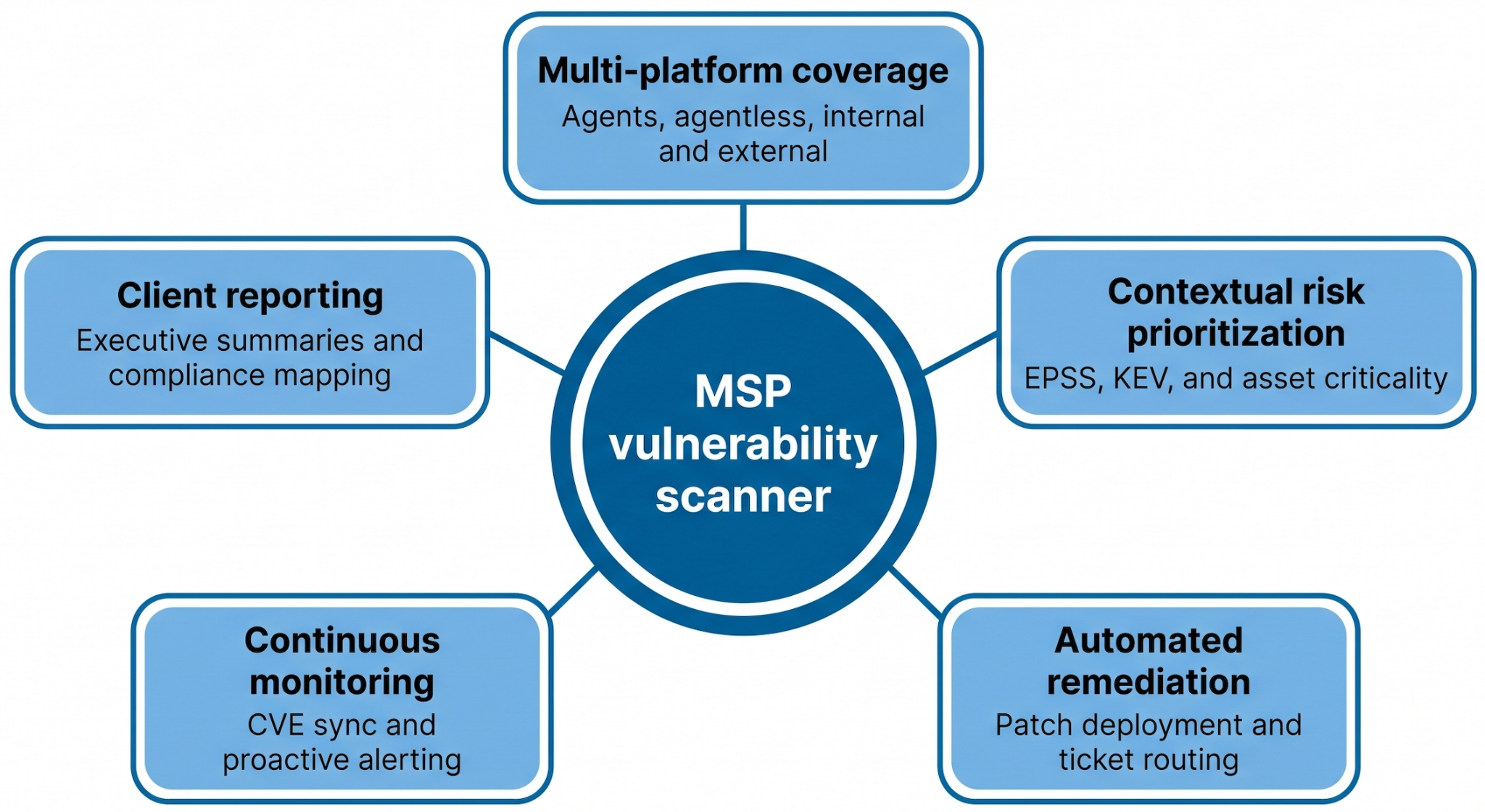
Five key capabilities of MSP vulnerability scanner platforms
3. Automated Remediation with Patch Management
A vulnerability scanner delivers limited value if remediation remains a manual and disconnected process. The interval between identifying a vulnerability and successfully resolving it constitutes the period during which organizations remain exposed to risk. Modern MSP vulnerability scanners address this challenge by integrating remediation directly into the vulnerability management workflow, thereby transforming scan findings into actionable tasks that can be tracked, assigned, and resolved without requiring operators to switch between multiple tools.
An effective platform automates much of the remediation lifecycle, beginning with ticket creation and triage. When high-priority vulnerabilities are discovered, the system can automatically generate tickets, assign ownership, apply prioritization rules, and route issues through existing operational workflows. Additionally, built-in patch management further streamlines remediation by enabling MSPs to deploy operating system updates across Windows, macOS, and Linux devices, as well as patches for hundreds of commonly used third-party applications. Automated approval policies, maintenance windows, and deployment schedules help ensure that patches are applied consistently while minimizing disruption to client operations.
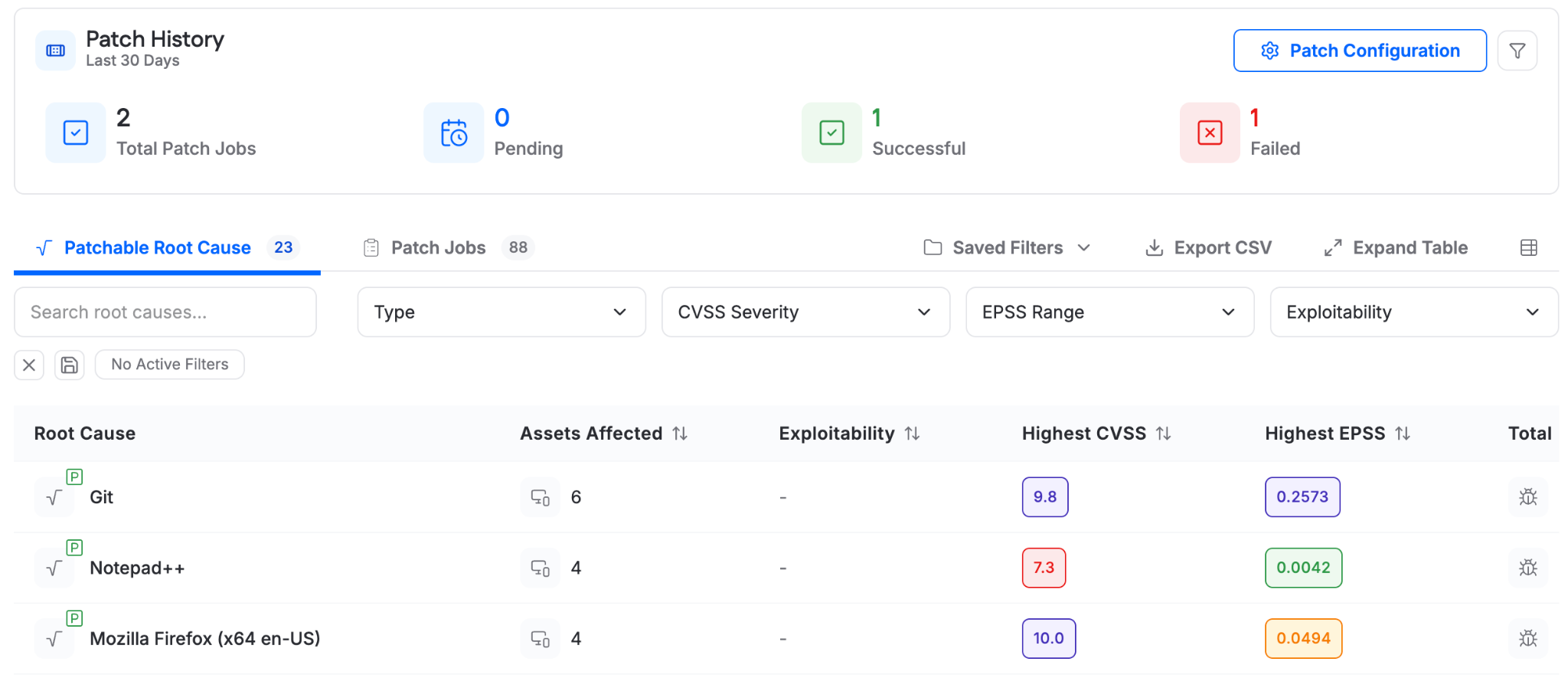
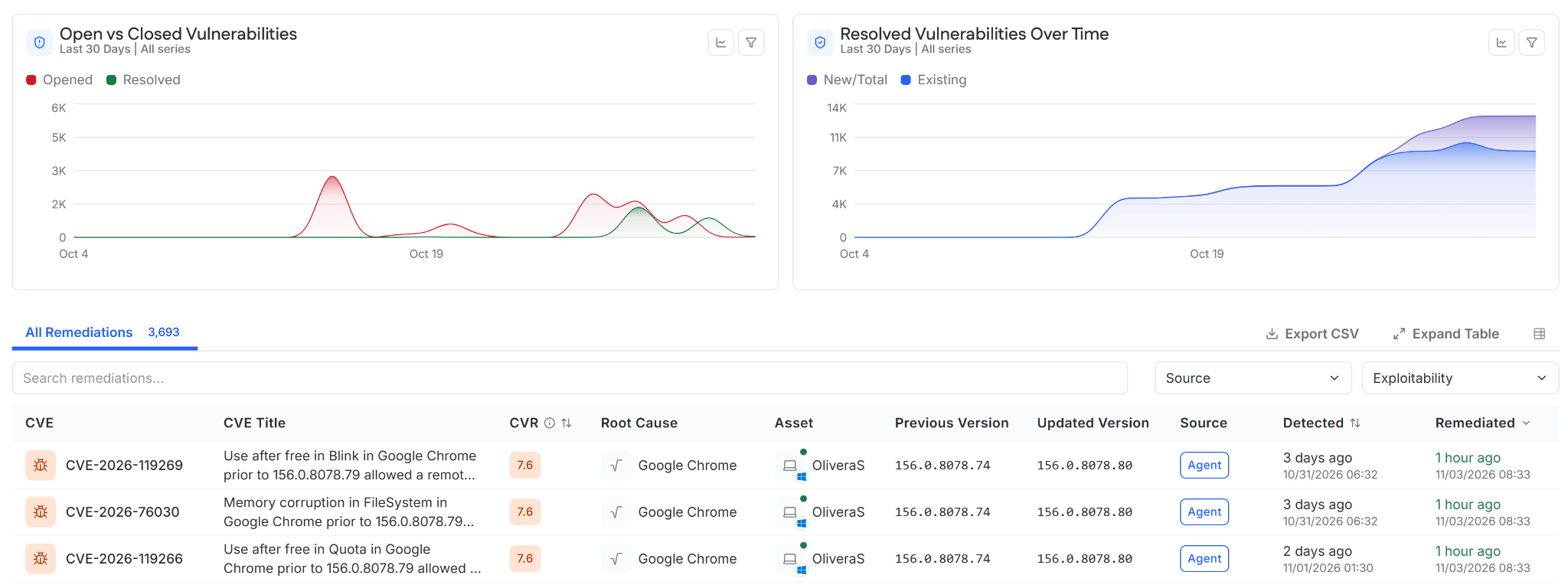
Verification is equally as important as deployment. A patch should not be considered complete simply because it was installed. Leading platforms automatically perform validation scans to confirm that vulnerabilities have been successfully remediated and that the affected systems are no longer exposed. Moreover, detailed remediation tracking provides audit-ready records documenting the actions taken, the time of occurrence, the approving parties, and the outcomes. In cases where a patch cannot be applied because of application compatibility concerns or operational constraints, the platform should support documenting exceptions and compensating controls to ensure that risk decisions remain visible and defensible.
For MSPs managing remediation at scale, integration with existing PSA and RMM platforms is critical. Vulnerability findings, tickets, patch deployments, and validation results should flow seamlessly between systems so that technicians can operate within their established processes. By combining automated triage, patch deployment, verification, and tracking into a single workflow, MSP vulnerability scanners help reduce remediation delays, improve operational efficiency, and ensure that vulnerabilities progress quickly from discovery to resolution.
{{banner-large-2-mssp="/inline-cards"}}
4. Continuous Monitoring
New vulnerabilities, exploits, and threat intelligence are published daily, which means that a system that appeared secure in a prior assessment may become a high-priority risk within a short timeframe. An effective MSP vulnerability scanner provides continuous monitoring by maintaining ongoing visibility into client environments and continuously evaluating assets against the latest threat information, rather than relying solely on periodic assessments.
This capability requires frequent synchronization with vulnerability intelligence sources such as CVE, NVD, KEV, and ExploitDB. As new vulnerabilities are disclosed, the platform should automatically correlate them against existing asset inventories, installed software, and previously collected scan data. This approach allows MSPs to quickly identify which clients and systems are affected by newly published threats without waiting for a full scan cycle to complete. When critical vulnerabilities or actively exploited issues are detected, automated alerts enable teams to respond before attackers can exploit the exposure.
Furthermore, continuous monitoring provides insight into long-term security posture. Beyond identifying new vulnerabilities, the platform should track trends over time and detect configuration or patching drift that can make environments less secure. By combining current threat intelligence, continuous visibility, and proactive alerting, MSPs can transition from reactive vulnerability management to a more proactive approach that reduces risk as threats emerge.
5. Client Reporting and Risk Communication
Raw vulnerability data has limited value unless it can be translated into clear, actionable insights for different stakeholders. MSPs operate in a dual-audience environment in which technical teams require detailed remediation data, while executives and business owners need a high-level understanding of risk posture. A robust MSP vulnerability scanner bridges this gap by converting scan outputs into structured reports that communicate security status, progress, and value in a meaningful way.
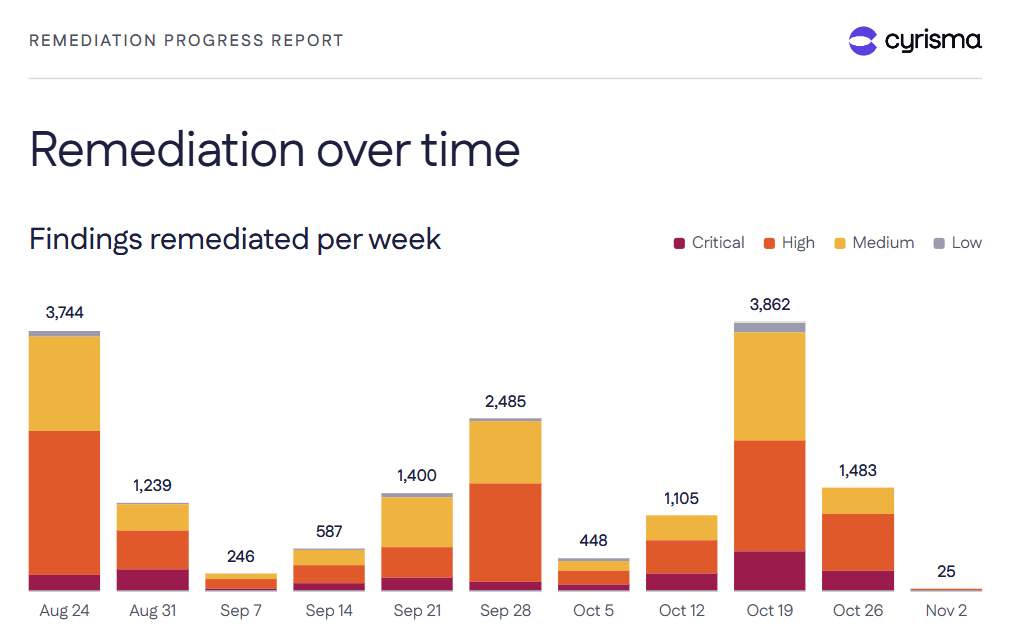
Reporting in MSP environments also constitutes a business-critical function, not merely an operational one. Clients expect visibility into how their security posture improves over time, making risk-reduction tracking essential. Effective platforms present remediation progress in a manner that highlights which vulnerabilities were discovered, which have been resolved, and which remain open. This capability enables MSPs to demonstrate measurable improvement rather than simply listing static findings. QBR-ready summaries further support this objective by providing executive-level narratives that avoid technical overload while still clearly illustrating the impact of ongoing security efforts.
Beyond progress tracking, modern reporting must align with compliance and contractual expectations. MSP vulnerability scanners should map findings and remediation evidence to frameworks such as SOC 2, HIPAA, CMMC, and PCI DSS, thereby reducing audit effort. Additionally, these platforms should support SLA tracking metrics, including mean time to remediate (MTTR), patch success rates, and scan coverage completeness. Increasingly, such reports are also used for cyber-insurance renewals, where insurers require proof of continuous monitoring and effective vulnerability management.
6. Customizable Executive Summaries
Not every vulnerability report should reach executive leadership in raw technical form. Leadership teams do not require exhaustive CVE listings; rather, they need a clear view of which issues genuinely threaten their environment, operations, and business outcomes. A capable MSP vulnerability scanner filters out irrelevant noise and produces executive-ready summaries that focus exclusively on risks tied to the organization's actual systems and priorities, thereby ensuring that reports are both readable and actionable.
This process begins with strict alignment to the client's actual asset inventory. Effective platforms suppress vulnerabilities in software, platforms, or services that are not present in the environment, preventing unnecessary alarms. They also map findings to business-critical systems, including ERP platforms, CRM systems, customer-facing applications, and revenue-generating infrastructure. This contextual alignment ensures that the focus remains on factors that would genuinely disrupt operations or affect customers, rather than on low-impact or irrelevant technical issues.
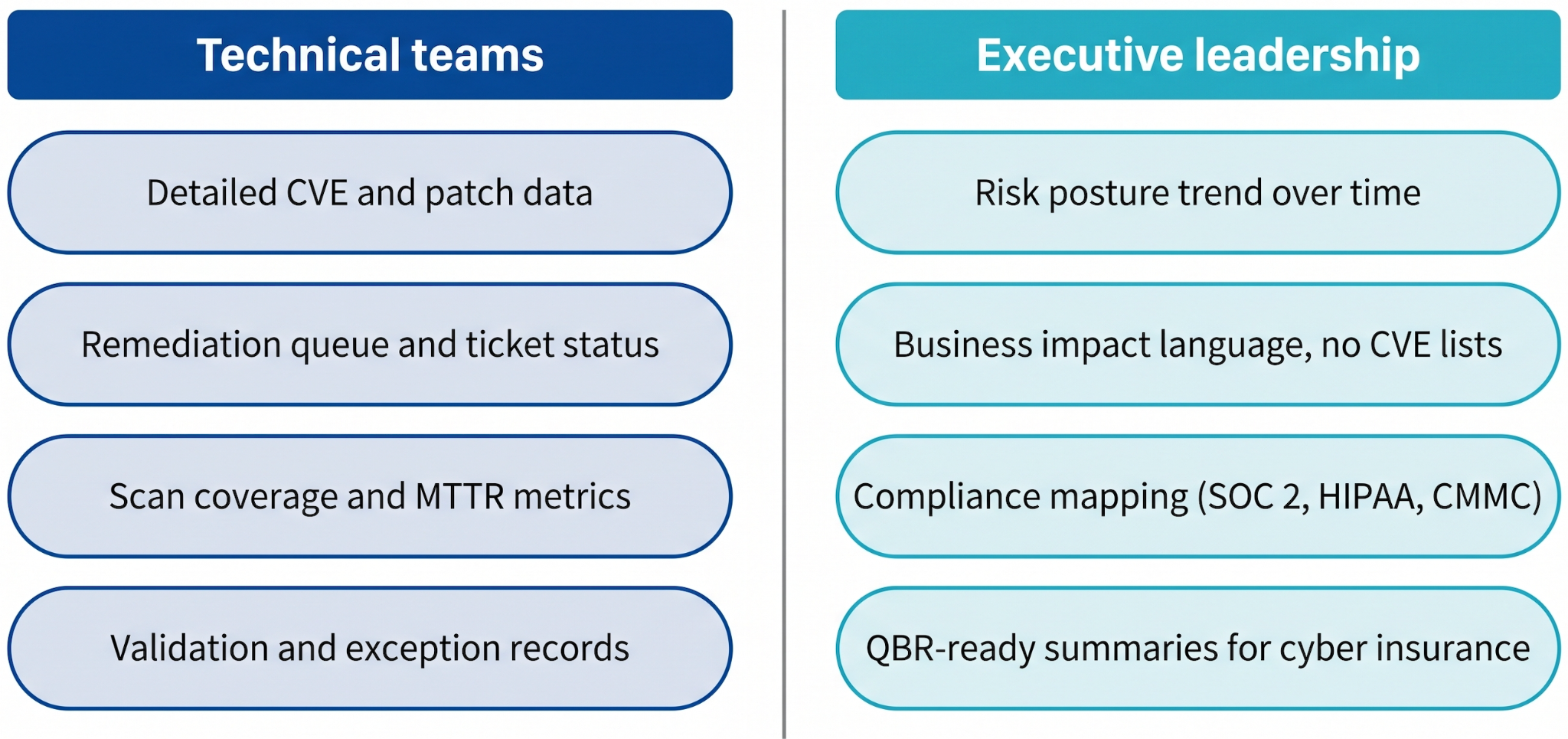
Additionally, executive summaries translate technical findings into business language that leadership can act on. Instead of listing CVSS scores, reports describe potential outcomes such as downtime risk, data exposure, or regulatory implications. Prioritization is further refined by considering exploitability and active threat status, so that leadership reviews only those vulnerabilities that are realistically attackable. Finally, customizable views allow MSPs to tailor summaries for different stakeholders or business units, ensuring that each audience receives a focused snapshot of the risks most relevant to their responsibilities.
{{b-table-2-mssp="/inline-cards"}}
Conclusion
The distinction between an MSP that operates a vulnerability scanner and one that maintains a comprehensive vulnerability management program lies in the degree of workflow integration. Scanning alone produces data; however, pairing it with contextual prioritization, automated remediation, continuous monitoring, and structured reporting produces measurable outcomes. In practice, the most effective MSP vulnerability scanners function not simply as detection tools but rather as operational platforms that facilitate the complete lifecycle from discovery to resolution, while simultaneously generating the evidence trail that clients, auditors, and insurers require.